Author: Mahiba Afsheen – Bangladesh – PROMPT! Cohort #1
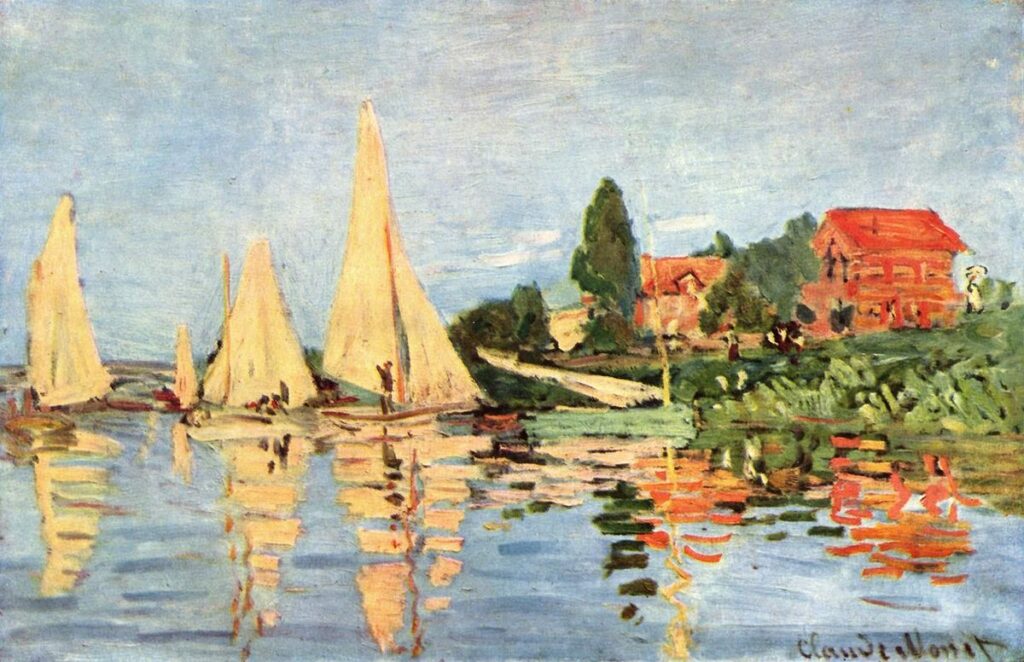
Regatta at Argenteuil, Claude Monet, c. 1872
Every work of art serves as an intimate confession; perhaps spilling forth from the vivid imagination of a child, splattered with vibrant colors across walls, or emerges meticulously crafted on the sleek surfaces of digital canvases. Art is an expression of our desires, sentiments, and personality. It’s a vessel that carries the artist’s intent and reveals how they perceive the world. The real intrigue lies not in the medium itself, but in the deeper question: what truths does it reveal about our innermost selves?
From eliciting deep personal emotions in the serene ambiance of an art gallery to bringing together entire communities in vibrant movements for social change, art stands as one of humanity’s most potent forms of expression. It has the unique ability to resonate with individuals on a profound level, inviting them to reflect on their experiences and feelings in the tranquil spaces where creativity is showcased.
At the same time, art serves as a catalyst for collective action, inspiring groups to unite in pursuit of justice, equality, and transformation. Whether through striking murals that brighten city streets or poignant sculptures that challenge societal norms, the artistic canvas has the power to spark dialogue, provoke thought, and ultimately drive the forces of change within society.
From canvas to code.
Art has existed before man was known to utter an intelligible word; dating back to a speculated 45,500 years ago, in the highland valley of the Indonesian island of Sulawesi, a purplish pig adorning the walls of a cave is the earliest known example of any form of.
”By flickering firelight, they carefully daubed three Sulawesi warty pigs — one more than a metre long — on the limestone wall using dark red pigment, complete with distinctive facial nubs and crest of stiff hair.” – Science reporter, Belinda Smith.
Since before the creation of art supplies, humanity has carried its creativity into the world through nothing but its fingers. Hence, art being inaccessible without AI is nothing but a hoax. Art itself has never been inaccessible; rather than taking the time to do a form of art to please yourself, some would generate ‘art’ with a simple prompt for nothing but attention and praise.
For instance, Shigeru Mizuki suffered the loss of his left arm during World War II, despite this, he still ended up becoming a famous manga artist best known for his manga, ‘GeGeGe no Kitarō’.
Another example of a well-known artist would be Frida Kahlo, who was born with a condition known as spina bifida, causing chronic disabling pain for long periods of time. Regardless of her condition, she continued painting, even going as far as to express her chronic pain through her art.
Thousands of artists, just like the two listed above, continue practicing and learning their passion despite their disabilities. And while the concept of AI isn’t wrong in itself, the way it’s executed is.
“Artists must be men of wit, consciously or unconsciously philosophers; read, study and think a great deal of life”-Robert Henri
Like most things, AI has both its benefits and drawbacks. Among its advantages, we have: reducing the time taken to perform certain tasks; executing complex tasks without high costs; virtual assistants replying to clients; and of course, the reduction of human error in tasks. But its list of downsides is much longer. Ranging from the unemployment of workers in the creative field to environmental damage, the record of AI’s disadvantages seem to be never-ending.
Try all it might, AI will never be able to mimic the passion of the human soul. The hours of work and skill that go into any form of artistic work can never be replicated by a few seconds of AI generating an image via a prompt. Along with simply causing scarcity of jobs among artists, AI servers produce electronic waste and are large consumers of water which happens to already be in short supply in many places around the world.
To address this issue, AI should not rely on fossil fuels for energy; instead, renewable sources like solar power should be utilized. Additionally, using AI as a substitute for actual artists can be detrimental to the perception of a product. Rather than employing AI for advertisements—which can make a product appear cheap and untrustworthy—it’s better to hire graphic designers to create advertising materials for your products.
AI generated art often stirs deep controversy, with many critics deeming it a profound affront to the traditional values or artistry and the rich ethnic heritage that art embodies. This perspective emphasizes that genuine art is not just about the finished piece, but is profoundly interwoven with human experiences, emotions, and ethnic narratives. The beauty of art culture lies in its ability to reflect the intricacies of the human condition, showcasing the creativity and soul of individuals throughout history. As such, the rise of AI in this realm raises questions about authenticity, excited depth, and the true essence of artistic expression, challenging the very foundation of what it means to create and appreciate art.
Art and culture work hand in hand, with elements from respective traditions and values sparking inspiration within artists and leaving a mark on their work. Textile art, rooted in techniques passed through generations, finds its way into daily life—whether through vibrant rugs found beneath our feet, or through the captivating artwork you see hanging on a friend’s wall. Cultural influences both the subject and the methods used by the artist. As artists develop their technique, they are influenced by their cultural practices, impacting the art scene. Culture serves as a deep well of inspiration, drawing from mythology, festivals, and of course, folk art.
Deriving from over two millennia ago, Bangladeshi folk art is the key to comprehending their culture and its people. Folk art has inspired architects, sculptors and potters, its influence showing up in many of their creations. Nakshi kantha, a form of art performed by rural women, still lives on to this day, the designs and motifs inspired by geography, daily lives, festivals, and more. And one of the oldest and most popular forms of folklore art in Bangladesh, Alpona. Alpona consists of colorful motifs and floral designs painted onto floors and ceilings during weddings or festivals. Not only is it painted, but it still lives on to this day through wood carving and mehendi art.
All this to say, art is more than just a product; it’s the embodiment of human creativity, emotion, and experience. Whether through writing or painting, art carries a depth that transcends it’s medium. The love, dedication, and unique skill an artist pours into their craft cannot be replicated perfectly by machines. While AI can certainly generate results and assist in the creative process, it lacks the ability to convey the personal stories, passion, and emotion that infuse an artwork with meaning. Art is the reflection of the artist’s soul; their inner world, struggles, triumphs and their visions. It’s a language that communicates without words, touching hearts and sparking conversations.
Moreover, there’s an environmental cost to the rise of AI. The energy consumption required to power AI models and systems can contribute to environmental degradation, further complicating the discussion around technology and creativity. True art, by contrast, connects us to our humanity, to nature, and to the timeless pursuit of expression. While AI may play a role in the future of creativity, it will never replace the soul that human artists put into their work.
“Art is not a thing; it is a way.”-Elbert Hubbard
Art is an exploration of what it means to be human—our emotions, experiences, and aspirations. It’s a space where innovation and tradition meet, where individuals push boundaries, challenge perspectives, and find new ways of communicating. Ultimately, art is an expression of the self and the world around us, something no machine can ever authentically recreate.
Art is a way of life, not something that can be replicated within a moment. It demands time, patience, and dedication. Artistic talent isn’t something you have to be born with—in fact, most artists aren’t. Whether it be digital, musical, or physical, art in any form requires commitment and consistent effort to grow and improve. True artistry is developed through passion and persistence, not instant perfection.
“Where the spirit does not work with the hand, there is no art.”-Leonardo da Vinci.