Author: Hadia Asad – Bangladesh – PROMPT! Cohort #1
From immortal jellyfish to pistol shrimp — meet the amazing creatures that could give Marvel a run for its money.
Introduction:
Humans have been living on Earth for about 200,000 years, and every so often, nature throws us a shocking plot twist. You might think humans are the most incredible beings God ever created… until you meet these real-life superheroes. After learning about their powers, you’ll be saying, “God literally ate.”
List of 4 fantastic creatures that will blow your mind:
Here comes the first one.
1-Immortal jellyfish (Turritopsis dohrnii):
As the name indicates these jellyfish are immortal, at least to an extent. Well that’s a big claim isn’t it? So let’s jump into their life cycle to find out what magic they are actually casting.
How can a creature be immortal?: different life stages:
- The life cycle of this jelly fish starts similarly to the other species .Museum curator Miranda Lowe explains, ‘They have eggs and sperm and these get released to be fertilized, and then from that you get a free-swimming larval form’.(Osterloff, n.d.).
- This larva then drifts around for some time and then settles down on a hard surface and forms a polyp.
- The polyp can form a small colony in which it produces more polyp by budding– a type of asexual reproduction.
- In this stage the baby jellyfish buds off , eventually growing into an adult called Medusa.
💡: Here come the plot twist:
- If this adult Medusa faces any physical damage or stress it does not die . Can you guess what happens? YES! It starts to shrink and its tentacles get reabsorbed and its ability to swim is also gone . It then settles on the sea floor as a blob – like cyst.
- In the following 24-36 hr, the cyst develops polyp-typical features, such as the stolonal hydrorhiza, where new polyps will arise from, eventually returning to the customary polyp-to-medusa ontogenetic sequence (Martell et al. 2016).
Turritopsis dohrnii’s reverse development is considered a metamorphosis (Müller and Leitz 2002; Berking 1998).
And this is how this creature got its popular name “ Immortal jellyfish”. But still it may be killed by the predators . So at the end of the day life depends on luck.
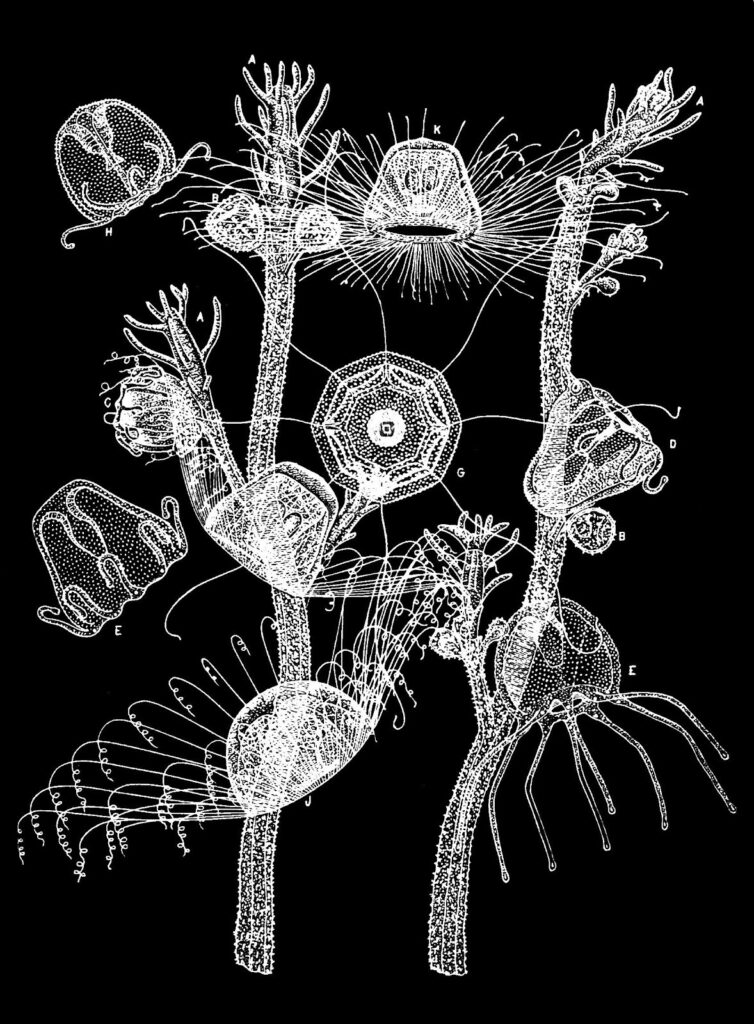
Source:Wikimedia
FACTS:
- Turritopsis prefer warmer waters, although
they have been spotted in colder areas as
well.
- Their diet consists of plankton, fish eggs
and small molluscs.
- They are tiny, at a maximum of 4.5mm tall
and wide.
2-Pistol Shrimp: Nature’s underwater gunslinger
What comes first to your mind when you hear the word pistol? “A gun shot”.. right? That’s exactly why this tiny sniper is known as “pistol shrimp”.
The pistol shrimp is about 5cm in length – not longer than your finger . It is a small crustacean equipped with a large claw. This claw has a mechanism similar to hammer and anvil . The hammer stretches away from the anvil to 90 degrees . The anvil never moves . Two muscles control this back and forth moment of the hammer which creates a tension and when released causes the hammer to fly back with a speed of upto115km/h.(Wikipedia contributors, 2025; Koukouvinis et al., 2017).
⚙️Mechanism behind the shot and sound:
The flying back of the hammer creates a jet stream which causes a low pressure area which is lower than the vapor pressure of the water . The air bubbles from the sides move
into that low pressure area causing it to expand and a cavitation bubble is formed which collapses in an explosive manner . This collapse is devastating for their prey. (Versluis et al., 2000; Koukouvinis et al., 2017).
Fun fact: the sound is produced when the bubble collapses and not by the hammer and anvil.(Versluis et al., 2000; Wikipedia, 2025).
- The sound from the collapsing bubble can reach between 200 and 218 decibels—that’s louder than a gunshot .(Environmental Literacy Council, n.d.; Carman, 2025).
- The explosion of the bubble let off a shockwave, a flash of light (a phenomenon known as sonoluminescence), and heat.
- The heat inside the bubble can spike to 4,400°C–4,800°C which is even hotter than lava .
- Scientists find this behavior so fascinating that they’ve even created robotic claws modeled after the pistol shrimp.(Wired,2019, March 15).
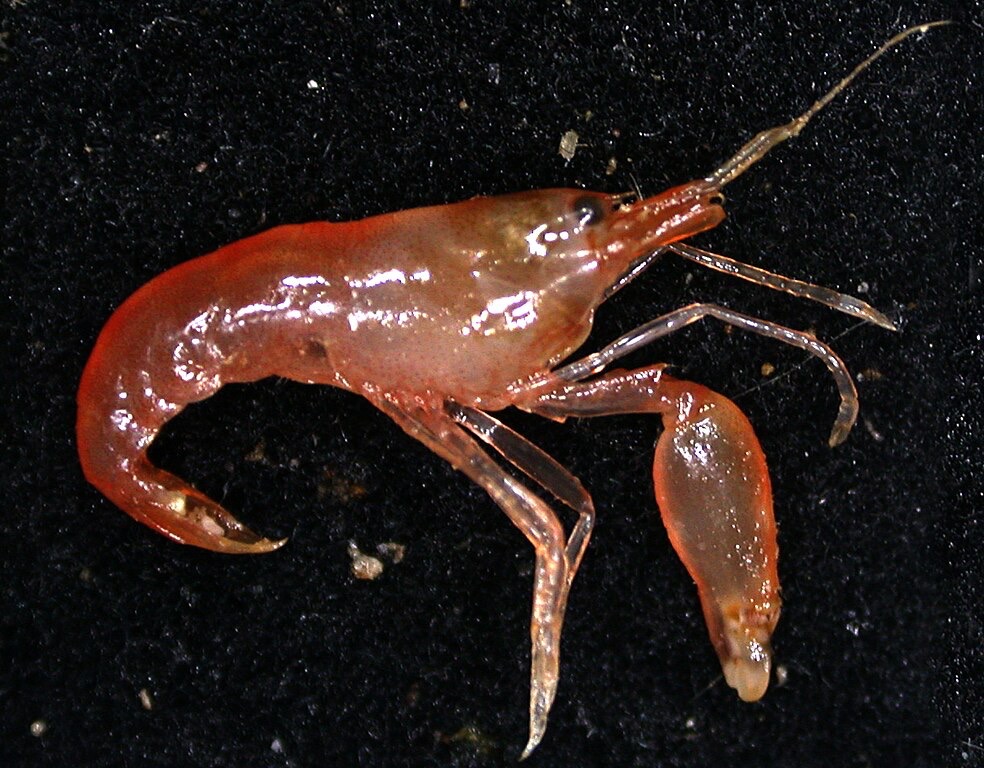
Source: Wikimedia
⭐But do you know what’s the scariest part about this little sniper buddy? ‘it has got infinity ammo’.
3- Axolotl (Ambystoma mexicanum):
If Peter Pan was an animal, it would be the axolotl , the salamander that decided, “ I’m never growing up.” It is found in the lakes around Mexico City, this adorable little creature keeps its frilly gills, smiley face, and youthful looks for life.
The special thing about this adorable creature is that it can regenerate parts of its body which is also its super power. It can regenerate almost every part of its body including:
- Missing limbs
- Bones
- parts of its eye
- Parts of its heart
- And even parts of its brain
(PubMed abstract, 2020; Wired, June 2025).
The best part is that they do this regeneration process without scaring which humans are not capable of.The wound is quickly covered by cells forming an apical epithelial cap. Underneath, connective-tissue cells multiply and form a blastema which rebuilds the missing limb perfectly.(Wikipedia contributors,2025).
👉A chemical gradient of retinoic acid, shaped by the enzyme CYP26B1, tells cells whether they’re supposed to rebuild an arm, a wrist, or a fingertip.(Wired, June 2025).
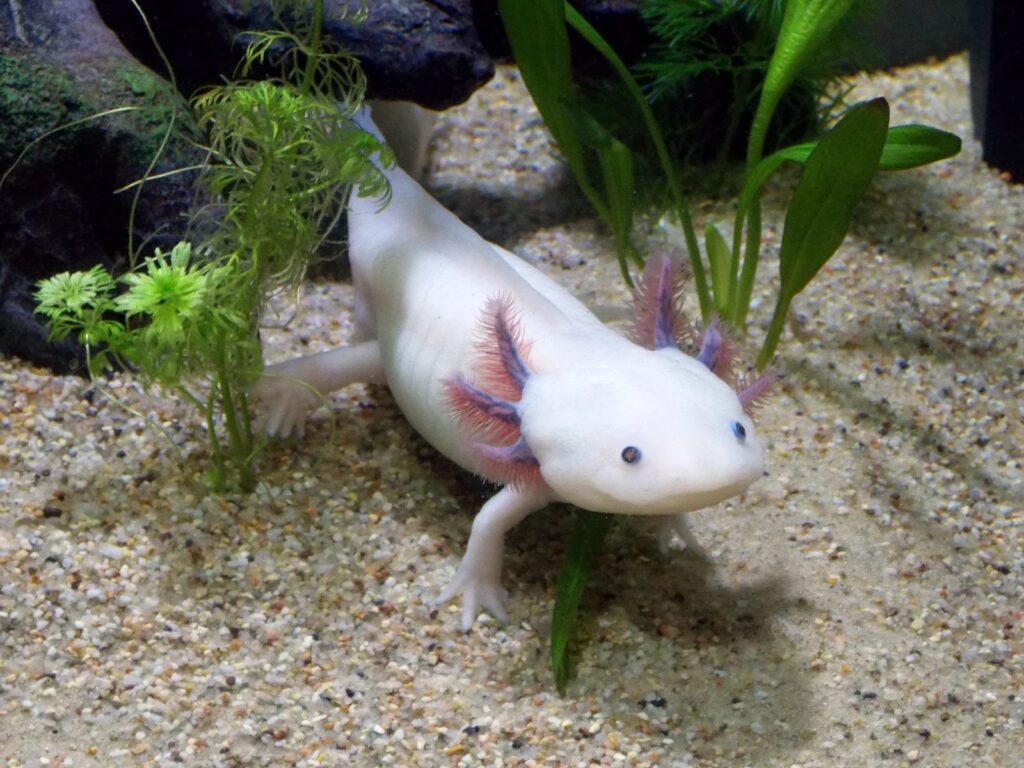
Source: Wikipedia
Fact: They are endangered.
They wear a constant smile, probably because they’ve got superpowers that would make a Harry Potter creature jealous.
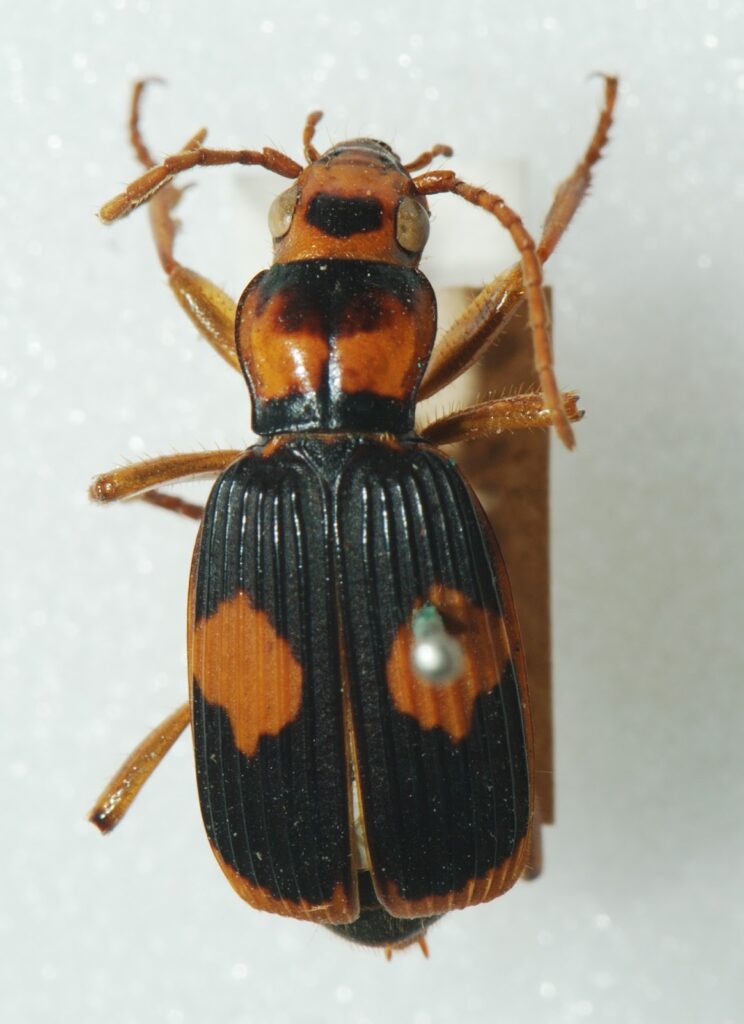
4- The Bombardier beetle (Brachinus spp.):
There are two categories of animals. Some are dangerous and some are endangered but this one is a bit different. ‘It is danger’. This little beetle is tiny looking but stores a proper chemistry lab in its abdomen.when threatened this beetle blasta a boiling hot chemical right into the attackers face.
What’s the magic behind it ?..let’s find out.
the beetle stores two harmless chemicals in separate chambers in its abdomen. When danger strikes, it mixes them in a special reaction chamber along with enzymes. This triggers an explosive chemical reaction that reaches nearly 100°C (212°F).Which is hot enough to burn.(Aneshansley et al., 1969)
After this the predators must thinking their life choices.May be the nature is trying to give the message: “Never underestimate anyone “.
- The bombardier beetle’s defense system has inspired engineers to design tiny chemical-spraying devices.
The spray is produced from a reaction between two hypergolic chemical compounds, hydroquinone and hydrogen peroxide, which are stored in the pygidial glands in the beetle’s abdomen. When the aqueous solution of hydroquinones and hydrogen peroxide reaches the “vestibule” (Eisner’s word), catalysts facilitate the decomposition of the hydrogen peroxide and the oxidation of the hydroquinone.(Aneshansley, D.J.; Eisner, T.; Widon, J.M.; Widon, B ,1969).
Heat from the reaction brings the mixture to near the boiling point of water and produces gas that drives the ejection.
Facts:
- Bombardier beetles inhabit all continents except Antarctica. They typically live in woodlands or grasslands in the temperate zones but can be found in other environments if there are moist places to lay their eggs.(Wikipedia contributors, 2023).
- Most species of bombardier beetles are carnivorous, including the larva. The beetle typically hunts at night for other insects, but will often congregate with others of its species when not actively looking for food.(Wikipedia contributors, 2023).
Source: Wikimedia
These are a few of Earth’s most extraordinary inhabitants, most of them probably unknown to you. They remind us that our planet isn’t just alive… It’s wildly imaginative.
References:
- Aneshansley, D. J., Eisner, T., Widom, J. M., & Widom, B. (1969). Biochemistry at 100°C: Explosive secretory discharge of bombardier beetles (Brachinus). Science, 165(3898), 61–63. https://doi.org/10.1126/science.165.3898.61
- Carman, K. (2025, April 8). Pistol shrimp: The fastest gun in the sea. HowStuffWorks. https://animals.howstuffworks.com/marine-life/pistol-shrimp.htm
- Koukouvinis, P., Bruecker, C., & Gavaises, M. (2017). Unveiling the physical mechanism behind pistol shrimp cavitation. Scientific Reports, 7(1), 13994. https://doi.org/10.1038/s41598-017-14312-0
- Müller, W A, and T Leitz, 2002 Metamorphosis in the Cnidaria. Can. J. Zool. 80: 1755–1771.
- Martell, L, S Piraino, C Gravili, and F Boero, 2016 Life cycle, morphology and medusa ontogenesis of Turritopsis dohrnii (Cnidaria: Hydrozoa). Ital. J. Zool. (Modena) 83: 390–399.
- Osterloff, E. (n.d.). Immortal jellyfish: The secret to cheating death. Natural History Museum. Retrieved August 13, 2025, from https://www.nhm.ac.uk/discover/immortal-jellyfish-secret-to-cheating-death.html
- PubMed abstract. (2020). Axolotl: A resourceful vertebrate model for regeneration and beyond [Abstract]. Developmental Dynamics, 251(12), 1914–1933. https://doi.org/10.1002/dvdy.520
- Versluis, M., Schmitz, B., von der Heydt, A., & Lohse, D. (2000). On the sound of snapping shrimp. Science, 289(5487), 2114–2117. https://doi.org/10.1126/science.289.5487.2114
- Wikipedia contributors. (2024, July 4). Alpheidae. In Wikipedia. https://en.wikipedia.org/wiki/Alpheidae
- Wikipedia contributors. (2023, October 5). Bombardier beetle. In Wikipedia. https://en.wikipedia.org/wiki/Bombardier_beetle
- Wired. (2025, June). Scientists discover the key to axolotls’ ability to regenerate limbs. Wired. Retrieved from https://www.wired.com/story/scientists-discover-the-key-to-axolotls-ability-to-regenerate-limbs
- Wired. (2019, March 15). A ferocious shrimp inspires a robot claw that shoots plasma. Wired. Retrieved from https://www.wired.com/story/shrimp-plasma/