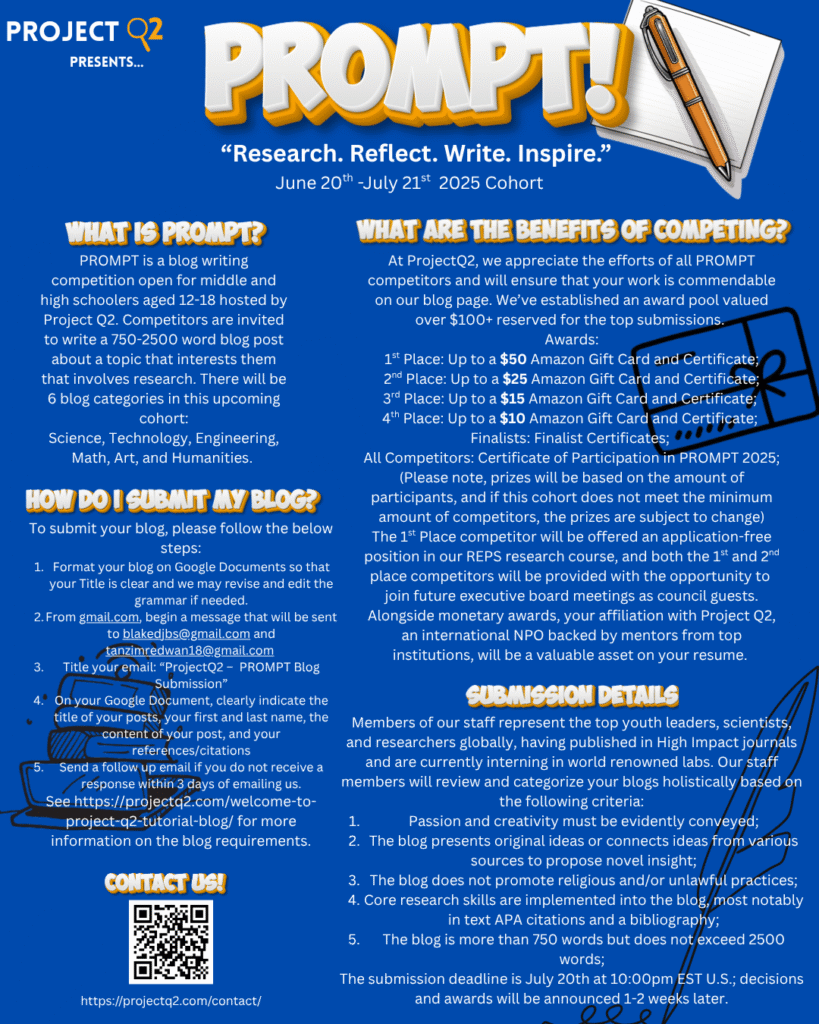
Author: Sondos Elliethy – 1st Place in PROMPT!
“History is written by the victors,” Winston Churchill once observed. But in our interconnected world, the question becomes more complex: whose version of victory do we choose to remember, and at what cost do we allow entire narratives to vanish into silence?
Memory is not neutral. Every monument erected, every textbook printed, every museum exhibition curated represents a deliberate choice about which stories deserve preservation and which should fade into obscurity. These choices, far from being academic exercises, shape our understanding of justice, identity, and human dignity. In examining how different nations construct, reconstruct, and sometimes obliterate historical narratives, we uncover a fundamental tension at the heart of modern society: the struggle between truth and power, between remembrance and erasure.
The Architecture of Forgetting: How Nations Rewrite History
Across the globe, governments engage in what historian Benedict Anderson called “the management of memory”—the systematic process by which official narratives are crafted, disseminated, and protected. This process operates through multiple channels: educational curricula, public monuments, state-sponsored museums, and media representations. Each serves as a tool for shaping collective consciousness about the past.
Consider Japan’s ongoing struggle with its World War II legacy. Despite overwhelming historical evidence, many Japanese textbooks minimize or omit entirely the military’s role in the Nanking Massacre, the exploitation of “comfort women,” and other wartime atrocities (Yoshida, 2006). The Society for History Textbook Reform, established in 1996, has successfully lobbied for textbooks that present a “balanced” view of Japanese actions during the war—a euphemism for narratives that emphasize Japanese suffering while downplaying Japanese aggression. This sanitization extends beyond education into public commemoration: the Yasukuni Shrine honors war criminals alongside ordinary soldiers, creating a space where militarism is quietly celebrated under the guise of honoring the dead.
The consequences of such selective memory extend far beyond Japan’s borders. When South Korean President Moon Jae-in visits memorials to comfort women, or when Chinese officials invoke historical grievances in diplomatic negotiations, they are responding to decades of Japanese historical revisionism. Memory becomes a weapon in international relations, with each nation’s version of the past serving as justification for present-day policies and grievances.
The Holocaust: Memory as Moral Imperative
Perhaps no historical event demonstrates the stakes of memory politics more clearly than the Holocaust. The systematic murder of six million Jews, along with millions of other victims, represents one of humanity’s darkest chapters. Yet even this thoroughly documented genocide faces ongoing challenges from denial, distortion, and instrumentalization.
Holocaust denial operates on multiple levels, from outright rejection of established facts to more subtle forms of minimization and relativization. The Institute for Historical Review, founded in 1978, publishes materials questioning the scope and nature of Nazi genocide, while maintaining an academic veneer (Lipstadt, 1993). More insidiously, some European politicians have attempted to equate Nazi crimes with Soviet atrocities, creating false equivalencies that diminish the Holocaust’s uniqueness.
These efforts at historical revision have profound contemporary implications. When Polish lawmakers passed legislation in 2018 criminalizing certain discussions of Polish complicity in the Holocaust, they sparked international controversy and damaged Poland’s relationships with Israel and the United States. The law, eventually amended, revealed how even well-documented historical events remain contested terrain where national identity and international relations intersect.
The politics of Holocaust memory also extends to its instrumentalization. Critics argue that some Israeli governments have exploited Holocaust memory to justify contemporary policies toward Palestinians, while simultaneously arguing that this historical trauma makes Israel uniquely vulnerable and deserving of international support. This dynamic illustrates how memories of victimization can be transformed into justifications for actions that create new victims.
Colonial Amnesia: The Persistence of Empire
European colonial powers face their own reckonings with historical memory, often characterized by what postcolonial theorist Ann Laura Stoler terms “colonial aphasia”—the systematic forgetting of colonial violence and exploitation. This selective amnesia manifests in multiple ways across former imperial powers.
France’s relationship with its colonial past exemplifies this phenomenon. Despite growing scholarship documenting the brutality of French colonial rule in Algeria, Vietnam, and West Africa, French textbooks and public discourse often present colonialism through the lens of “civilizing mission” rhetoric (Stora, 2021). The French government’s 2005 attempt to mandate teaching about the “positive aspects” of colonialism sparked massive protests and revealed deep divisions about how to remember the empire.
Similarly, British education largely omits the violence of imperial rule. Students learn about the British Empire’s geographic scope but rarely encounter detailed discussions of the Bengal famines that killed millions, the brutal suppression of the Mau Mau uprising in Kenya, or the systematic exploitation that funded Britain’s industrial development. When former colonies demand reparations or the return of cultural artifacts, these requests are often met with bewilderment by British publics who have never learned about the extraction and violence that characterized imperial rule.
Belgium’s relationship with its Congolese colonial legacy presents perhaps the most stark example of colonial amnesia. King Leopold II’s private rule over the Congo Free State resulted in the deaths of millions through forced labor, violence, and disease. Yet Belgian museums only began seriously grappling with this history in the 21st century, and many Belgians remain unaware of the scope of colonial violence (Hochschild, 1998).
Gaza and the Weaponization of Memory: When Historical Trauma Becomes Justification for Genocide
Contemporary events in Gaza reveal the most disturbing dimension of memory politics: how historical trauma can be weaponized to justify present-day atrocities. The Israeli state’s systematic destruction of Palestinian life, culture, and memory represents a textbook case of how powerful nations manipulate historical narratives to legitimize what international legal scholars increasingly recognize as genocide (Albanese, 2024).
The Israeli narrative strategically deploys Holocaust memory to shield contemporary war crimes from criticism. By positioning any critique of Israeli actions as antisemitism, Israeli officials and their supporters create a rhetorical fortress that immunizes state violence from accountability. This manipulation of Jewish trauma represents a profound betrayal of Holocaust survivors’ suffering, transforming their pain into a weapon against other oppressed people.
Meanwhile, Palestinian memory faces systematic erasure through what can only be described as memoricide—the deliberate destruction of cultural heritage, historical sites, and collective memory. Israeli forces have destroyed over 200 cultural sites in Gaza since October 2023, including the oldest mosque in Gaza, ancient archaeological sites, and cultural centers that preserved Palestinian heritage (UNESCO, 2024). This destruction follows a decades-long pattern of obliterating Palestinian villages, renaming Palestinian places with Hebrew names, and denying Palestinian historical presence in their ancestral lands.
The contrast between institutional memory preservation reveals the stark power imbalance. While Israeli Holocaust museums receive international funding and recognition, Palestinian museums document the Nakba struggle for basic survival. The Palestinian Museum in Birzeit operates under constant threat of closure, while Israeli settler organizations receive government support to create “museums” that justify land theft and displacement.
International media coverage demonstrates how memory politics shapes real-time interpretation of ongoing genocide. Western journalists routinely frame Israeli military operations as “responses to terrorism” while describing Palestinian resistance to occupation as unprovoked violence. This framing erases the historical context of 75 years of dispossession, siege, and apartheid that created the conditions for Palestinian resistance.
The weaponization of antisemitism accusations to silence criticism of Israeli actions represents perhaps the most cynical abuse of historical memory. By equating legitimate criticism of Israeli state violence with Holocaust denial, pro-Israel advocates not only shield war crimes from scrutiny but also trivialize actual antisemitism. This rhetorical strategy has been so effective that even documenting Israeli human rights violations becomes characterized as “antisemitic,” creating a discourse where Palestinian suffering becomes literally unspeakable in mainstream forums.
The ongoing genocide in Gaza thus represents the ultimate failure of the “never again” promise. When institutions created to preserve memory of historical atrocities remain silent in the face of contemporary genocide, they reveal themselves as guardians not of universal human dignity but of selective memory that serves power rather than justice.
Museums and Monuments: Curating National Identity
Physical spaces of memory—museums, monuments, and memorials—serve as concrete manifestations of official historical narratives. These institutions wield enormous power in shaping public understanding of the past, yet they remain contested sites where different groups struggle for representation and recognition.
The National Museum of African American History and Culture in Washington, D.C., represents a successful effort to center previously marginalized narratives within official American memory. Its establishment required decades of advocacy and political struggle, revealing how even within democratic societies, decisions about whose stories deserve institutional recognition remain contentious (Bunch, 2019). The museum’s popularity and impact demonstrate the hunger for more inclusive historical narratives, while also highlighting how much American history had been told without adequate attention to African American experiences.
Conversely, the Museum of the History of Polish Jews in Warsaw illustrates the complexities of representing traumatic histories. The museum’s emphasis on Jewish life and culture, rather than focusing primarily on destruction and persecution, sparked debates about how to balance celebration of Jewish heritage with acknowledgment of the Holocaust and pogroms. These debates reflect broader questions about whether museums should serve primarily as sites of mourning, education, or cultural celebration.
Confederate monuments in the American South reveal how physical memorials can perpetuate historical distortions long after the events they commemorate. Most Confederate monuments were erected not immediately after the Civil War but during the Jim Crow era and the Civil Rights Movement, serving as assertions of white supremacy rather than neutral commemorations of historical events (Cox, 2003). The recent removal of many of such monuments has sparked intense debates about historical memory, with defenders arguing for historical preservation and critics pointing to the monuments’ role in perpetuating racist narratives.
Digital Memory: New Frontiers in Historical Contestation
The digital age has transformed the landscape of memory politics, creating new opportunities for historical documentation while also enabling the rapid spread of historical misinformation. Social media platforms, online archives, and digital museums have democratized access to historical information while also creating echo chambers where false narratives can flourish unchallenged.
The digitization of historical archives has enabled unprecedented access to primary sources, allowing researchers and activists to uncover previously hidden aspects of historical events. The National Security Archive’s publication of declassified government documents has revealed new details about American involvement in coups, human rights abuses, and other controversial events. Similarly, online testimony projects have preserved survivor accounts of genocides, wars, and other traumatic events that might otherwise be lost.
However, digital platforms also enable the rapid spread of historical misinformation. Holocaust denial websites use sophisticated design and pseudo-academic language to lend credibility to false claims, while social media algorithms can lead users down rabbit holes of conspiracy theories and historical revisionism. The challenge for educators and policymakers is how to harness the democratizing potential of digital technology while combating the spread of false historical narratives.
The Textbook Wars: Shaping Young Minds
Perhaps nowhere are the stakes of memory politics higher than in educational curricula, where official narratives are transmitted to young people during their most formative years. Textbook controversies reveal how different groups contest the right to shape future citizens’ understanding of their nation’s past.
The Texas State Board of Education’s influence over American textbook content demonstrates how political considerations can override scholarly consensus in shaping educational materials. Texas’s large textbook market gives its curriculum standards outsized influence over national educational content, and the state’s conservative political leadership has repeatedly attempted to minimize discussions of slavery, racism, and other controversial aspects of American history (FitzGerald, 2009). The board’s 2010 decision to refer to the slave trade as the “Atlantic triangular trade” and to emphasize the role of free market economics in ending slavery sparked national controversy and lawsuits.
Similar dynamics play out globally. Turkish textbooks minimize the Armenian Genocide, referring instead to “relocations” and “intercommunal violence” during World War I. Chinese textbooks omit discussions of the Great Leap Forward’s man-made famine and the Cultural Revolution’s excesses, focusing instead on economic development and national unity. Russian textbooks increasingly present Stalin as a harsh but effective leader who modernized the country and won World War II, while minimizing discussions of political repression and human rights abuses.
These curriculum battles reflect broader questions about the purposes of public education. Should schools primarily transmit patriotic narratives that inspire civic pride, or should they encourage critical thinking about national history, including its darker chapters? Different educational philosophers and political movements provide conflicting answers to these questions, with the balance often determined by political power rather than pedagogical principles.
The Psychology of Collective Memory
Understanding memory politics requires grappling with the psychological mechanisms through which individuals and groups construct, maintain, and transmit collective memories. Social psychologist Maurice Halbwachs demonstrated that individual memories are shaped by group membership and social context, while collective memories are constructed through social interaction and institutional reinforcement (Halbwachs, 1992).
Traumatic events pose particular challenges for collective memory formation. Societies often struggle to integrate traumatic experiences into coherent national narratives, leading to what psychologist Vamik Volkan terms “chosen traumas”—historical events that become central to group identity and are transmitted across generations through storytelling, commemoration, and cultural practices. These chosen traumas can serve positive functions by fostering group solidarity and resilience, but they can also perpetuate cycles of victimization and revenge.
The intergenerational transmission of trauma and memory creates additional complexities. Children and grandchildren of trauma survivors often carry emotional connections to historical events they did not directly experience, leading to what researcher Marianne Hirsch calls “postmemory”—the relationship of the second generation to powerful, often traumatic, experiences that preceded their births (Hirsch, 2012). This phenomenon helps explain why historical events can remain emotionally charged and politically relevant long after their occurrence.
Truth, Power, and the Future of Memory
The politics of memory ultimately raises fundamental questions about the relationship between truth and power in democratic societies. While historians strive for objective accounts of past events, the selection, interpretation, and dissemination of historical knowledge inevitably involve subjective choices about what matters and why.
This does not mean that all historical narratives are equally valid or that objective truth is impossible to achieve. Scholarly methods, primary source evidence, and peer review provide tools for distinguishing between more and less accurate accounts of historical events. However, even accurate historical accounts must be interpreted and contextualized, processes that inevitably involve value judgments about significance and meaning.
The challenge for democratic societies is to create space for multiple perspectives while maintaining commitment to factual accuracy and evidence-based reasoning. This requires educational institutions that encourage critical thinking, media systems that prioritize truth over sensationalism, and political leaders who resist the temptation to exploit historical grievances for short-term political gain.
Toward Inclusive Memory: Learning from Transitional Justice
Some societies have developed innovative approaches to dealing with contested historical narratives through transitional justice mechanisms. Truth and reconciliation commissions in South Africa, Guatemala, and other post-conflict societies have attempted to create official records of human rights abuses while also providing forums for victim testimony and perpetrator acknowledgment.
South Africa’s Truth and Reconciliation Commission, led by Archbishop Desmond Tutu, represented an ambitious attempt to create a shared national narrative about apartheid-era abuses while also promoting reconciliation between former enemies. The commission’s emphasis on restorative rather than retributive justice enabled many perpetrators to confess their crimes in exchange for amnesty, creating a detailed record of human rights violations while also attempting to heal social divisions.
However, transitional justice mechanisms also face significant limitations and criticisms. Many victims and their families felt that the South African commission prioritized reconciliation over justice, allowing perpetrators to escape punishment while failing to address structural inequalities created by apartheid. Similar criticisms have been leveled at other truth commissions, suggesting that the relationship between truth-telling and reconciliation is more complex than early advocates assumed.
Personal Reflection: The Weight of Discovery
Researching this topic has fundamentally changed how I understand the world around me. What began as an academic inquiry into historical narratives became a deeply personal reckoning with the power structures that shape our understanding of truth itself. I found myself questioning not just what I had been taught about history, but why certain stories were emphasized while others were relegated to footnotes or omitted entirely.
The most profound realization came while documenting the systematic erasure of Palestinian memory and the weaponization of Jewish trauma to justify ongoing genocide in Gaza. Reading testimonies from Palestinian families whose homes were destroyed, whose children were killed, whose very right to exist was denied, while simultaneously witnessing how Holocaust memory was manipulated to shield these crimes from criticism, fundamentally changed my understanding of how historical trauma can be both preserved and perverted.
I found myself confronting uncomfortable truths about how institutions I had trusted—universities, museums, media organizations—participate in historical erasure when it serves powerful interests. The revelation that Western academic institutions remained largely silent during Israel’s systematic destruction of Gaza’s universities and cultural sites forced me to question whether their commitment to knowledge and memory was genuine or merely performative.
This research revealed that neutrality in the face of injustice is complicity. When I initially attempted to present “both sides” of the Palestinian struggle for recognition, I realized I was reproducing the very power imbalances I sought to critique. There is no neutral position between the oppressor and the oppressed, between the colonizer and the colonized, between those who seek to erase memory and those fighting for the right to exist.
I now understand that every textbook I read, every museum I visit, every monument I pass represents a choice about whose humanity is worth preserving. This knowledge carries responsibility. As a young person inheriting these contested histories, I have a duty to seek out the silenced voices, to question official narratives, and to ensure that the stories of the marginalized are not lost to the convenience of the powerful.
Conclusion: The Moral Imperative of Memory Justice
The politics of memory represents one of the most urgent challenges of our time. As we stand at the intersection of technological revolution and rising authoritarianism, the struggle over who gets to remember and who gets erased has taken on existential dimensions. This is not merely an academic debate about historical interpretation—it is a battle for the soul of human civilization itself.
Every day, powerful institutions make decisions that determine whose stories will survive and whose will be forgotten. When social media platforms silence indigenous voices while amplifying corporate propaganda, when educational systems whitewash colonial violence while celebrating imperial “achievements,” when museums prioritize donor sensibilities over historical accuracy, they participate in a form of cultural genocide that destroys the foundations of justice and human dignity.
The stakes could not be higher. When societies allow false or incomplete historical narratives to take root, they create conditions for renewed conflict, injustice, and human suffering. When powerful groups are permitted to erase the experiences of the marginalized, they perpetuate systems of oppression that deny basic human dignity to entire populations. The road to genocide is paved with historical amnesia, and the path to justice requires unflinching commitment to memory and truth.
Yet there is also reason for profound hope. Around the world, young people are demanding honesty about their nations’ histories. From American students challenging sanitized accounts of slavery to European activists calling for reparations for colonial crimes, a new generation refuses to inherit the comfortable lies of their predecessors. Digital technologies, despite their vulnerabilities to manipulation, have also created unprecedented opportunities for marginalized communities to preserve and share their stories without relying on institutional gatekeepers.
The future of memory politics will be determined by choices we make today. Will we build institutions that privilege truth over power, that center the voices of the marginalized over the comfort of the privileged? Will we create educational systems that develop critical thinking rather than blind patriotism? Will we demand that our leaders reckon honestly with historical injustices rather than perpetuating convenient myths?
This is not merely about historical accuracy—it is about preventing ongoing genocide. When we allow Israel to weaponize Holocaust memory to shield its crimes in Gaza, when we permit digital platforms to silence Palestinian voices, when we fail to recognize the systematic destruction of Palestinian culture and memory, we become complicit in historical erasure that enables contemporary atrocities.
The future of memory politics will be determined by whether we have the courage to confront uncomfortable truths about power, injustice, and complicity. Will we build institutions that privilege truth over comfort, that center the voices of the oppressed over the propaganda of oppressors? Will we create educational systems that teach students to recognize and resist genocide in real-time, rather than simply mourning it after the fact?
These questions demand immediate answers. Every day that international institutions remain silent while Israel destroys Palestinian universities, libraries, and cultural sites represents another victory for historical erasure. Every moment that Western media frames Israeli genocide as “self-defense” perpetuates the very memory politics that enable mass atrocity.
Gaza has become the test case for whether “never again” was a genuine commitment to human dignity or merely a slogan to commemorate Jewish suffering while ignoring Palestinian genocide. The world’s response to Israeli atrocities will determine whether memory politics serves justice or simply provides cover for the powerful to commit crimes with impunity.
—
References
Bunch, L. G. (2019). A Fool’s Errand: Creating the National Museum of African American History and Culture in the Age of Bush, Obama, and Trump. Smithsonian Books.
Cox, K. L. (2003). Dixie’s Daughters: The United Daughters of the Confederacy and the Preservation of Confederate Culture. University Press of Florida.
FitzGerald, F. (2009). America Revised: History Schoolbooks in the Twentieth Century. Vintage Books.
Halbwachs, M. (1992). The Social Frameworks of Memory. University of Chicago Press.
Hirsch, M. (2012). The Generation of Postmemory: Writing and Visual Culture After the Holocaust. Columbia University Press.
Hochschild, A. (1998). King Leopold’s Ghost: A Story of Greed, Terror, and Heroism in Colonial Africa. Houghton Mifflin.
Lipstadt, D. E. (1993). Denying the Holocaust: The Growing Assault on Truth and Memory. Free Press.
Podeh, E. (2002). The Arab-Israeli Conflict in Israeli History Textbooks, 1948-2000. Bergin & Garvey.
Stora, B. (2021). Algeria 1830-2000: A Short History. Cornell University Press.
Yoshida, T. (2006). The Making of the “Rape of Nanking”: History and Memory in Japan, China, and the United States. Oxford University Press.