Author: Josephine Chandler – 2nd Place in PROMPT!
Introduction
Cancer and chemotherapy treatments have been a topic of discussion for many decades in the healthcare world. The disease itself does not have a universal cure or treatment, as each type of cancer needs to be treated with varying medications, therapies, or surgeries. Chemotherapy is one of the most common types of treatment used for many different types of cancers, such as leukemia, breast cancer, colon cancer, etc. Chemotherapy involves injecting one of many available drugs into the body and allowing it to attack the fast-growing cancer cells present. The medication targets cancerous cells at different stages of their development, depending on the specific medication used. These drugs can locate and attack healthy cells as well. Though unlike the invasive cancer cells, healthy cells are usually able to recover after an attack. It is a relatively efficacious method for cancer treatment, as researched by Maldonado et al. The treatment response range averages around 50 percent, measured over 25 different types of cancers recorded [3]. However, while this treatment can be efficient at eliminating cancer cells in the body, chemotherapy also affects normal tissues and cells, as stated above. Mainly affecting hair follicles, blood cells in bone marrow, cells in the reproductive system, digestive tract, and mouth. These types of cells also divide and grow exceptionally fast, making it hard for the drug to determine which cells are cancerous or not. Leading to the well-known side effects of chemo, such as:
– Fatigue
– Hair loss
– Neutropenia (low white blood cell levels)
– Higher likelihood of infections
– Nausea and vomiting
– Anemia
– Nerve issues
These are some common symptoms and side effects of chemotherapy [4]. Some people will have different symptoms than others, and of varying severity. The journey is often long and arduous; many patients shave their heads due to hair loss, deal with debilitating nausea, and are at higher risk for more serious conditions. Even after intense treatment, the cancer cells still have a chance at regenerating and picking up right where they left off. Fortunately, clinical trials that have been studied by experts, such as those by Park et al., have shown that certain species of medical mushrooms, such as Lentinula edodes and Agaricus bisporus, to name a few prominent contenders. These could be utilized to potentially reduce the strain chemotherapy has on the body, aiding in combating the cancer cells themselves [1]. Doctors and scientists have been experimenting with the compounds in these mushrooms for decades in conjunction with chemotherapy treatment. Their studies have shown that certain prebiotics and polysaccharides, such as antroquinonol, cordycepin, hispolon, lectin, and krestin, found in specific species of medical fungus, are effective in patients with varying types of cancer [2]. If more studies and trials take place, the uses of these anticancer compounds in mushrooms can be researched further. Perhaps making cancer treatment and the symptoms that come with it more bearable. As well as potentially killing and weakening cancer cells on their own.
How it works
The main chemical compounds in mushrooms that provide anti-tumor and anti-cancer effects are classified as polysaccharides. These compounds consist of many small monosaccharides, the simplest form of sugar molecules. When these sugar molecules join together with the help of special enzymes called glycosidases, they become polysaccharides, falling into the groups homo or heteropolysaccharides. Depending on whether the monosaccharides connected are of the same or different types. Their structure also matters when it comes to the naming of these compounds; a straight chain with no bends or twists is a linear polysaccharide. A chain that turns and bends is called a branched polysaccharide.
There are many different forms of polysaccharides; every single living organism needs and makes these compounds. Used for storing energy, sending cellular messages, or providing support for bodily cells and tissues. When taken in an extract or powder form, the polysaccharides and other bioactive compounds in the mushrooms enter the body, going through the digestive tract and getting absorbed into the blood through the small intestine. For more complex polysaccharides that are harder to digest, they enter the large intestine to ferment into more digestible and absorbable carbohydrates. The gut is able to break down the tougher polysaccharides as well. Li et al. found that the bacteria in the gut region could degrade the polysaccharides into gas, heat, and short-chain fatty acids, which could enhance immune response and inhibit the formation of tumors [10]. Unfortunately, most polysaccharides are still quite hard to absorb into the body, even through fermentation.
Consequently, research has been and is currently being done on different types of procedures to edit the polysaccharides and their components into easily absorbable compounds. Guo et al. found that using nanoparticles as carriers was sufficient in increasing polysaccharides’ bioavailability, with their large surface area allowing them to bind to and absorb other compounds more efficiently. Another method found was using absorption promoters like Trimethyl chitosan Chloride (TMC) and chitosan (CS). These two compounds form complexes with anionic macromolecules and increase the paracellular permeability of the polysaccharides, respectively. Polysaccharides could be introduced in conjunction with other cancer-treating drugs and chemotherapy. Such as S-1/CDDP/lentinan, S-1/lentinan, and superfine dispersed Lentinan (SDL) chemotherapies [11]. Using these combinations of chemotherapy and cancer-fighting drugs and polysaccharides, the cancer cells can be shrunken and eradicated more efficiently. Along with less intense symptoms from the chemotherapy attacking the healthy cells. An example was analyzed by Kim et al. in the Ganoderma sinense mushroom polysaccharide, also known as the reishi mushroom. They used it as an additional treatment for cancers such as leukemia, and to reduce hematopoietic loss from chemotherapy or radiation treatments [12]. By stimulating the T cells, natural killer cells, and macrophages, a holistic increased immune response is therefore achieved, fighting the cancer along with several other polysaccharide compounds. Various clinical studies that are showcased above highlight the immense potential of medicinal mushrooms and their compounds in the cancer treatment field. If studied further, it may be able to contribute to lowering the cancer population in the United States, or even the world.
Medicinal mushrooms: properties and compounds
Mushrooms have been growing and thriving on the planet for millions of years. Growing from mycelium deep in the ground and shooting up with colorful gills and sturdy stalks. While they may look like any other plants, mushrooms actually have many differences, both physical and chemical, from their leafy neighbors. The chemical composition of mushrooms is mostly water, with a percentage of around 80 to 95 percent. While providing macronutrients, amino acids, and other helpful compounds. Though depending on the mushroom, other compounds that exhibit anti-cancer and anti-tumor properties are contained in the fungus. Here are six species of medicinal mushrooms that contain cancer-combating compounds.
Agarius Bisporus
Active compounds: Polysaccharides, lectin
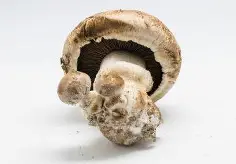
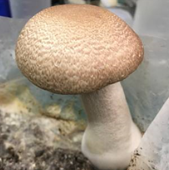
The Agrius Bisporus (also known as the white button mushroom) is one of the most widely grown and consumed mushrooms globally. It is often found in fields and meadows across Europe and North America. While it’s most commonly found in salads or as a pizza topping, the Agarius bisporus has been undergoing testing for its supposed anti-cancer properties and abilities to ameliorate chemotherapy symptoms. The white button mushroom contains the bioactive compounds polysaccharides and lectin, which are shown to be effective in patients with breast cancer, prostate cancer, and in helping people who have overcome the disease in studies done by individuals such as Mori et al, who found the extract and polysaccharides of this mushroom to lower levels of prostate-specific antigen in the androgen receptor (AR) signaling axis, which is a major therapeutic and target area for treating various levels of prostate cancer [20].
Antrodia Cinnamomea
Active compounds: polysaccharides
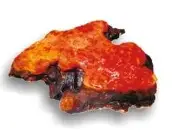
The Antrodia cinnamomea fungus is a parasitic mushroom that inhabits the endangered tree species Cinnamomum kanehirai, native to Taiwan. Along with its potent polysaccharides, Liu et al.saw that other compounds separated from this mushroom are known to have bioactive properties, compounds including benzenoids, diterpenes, triterpenoids, steroids, and maleic/succinic acid derivatives [6]. This fungus, while quite hard to find due to the trees it resides on since it is at risk of extinction. Nonetheless, the Antrodia Cinnamomea mushroom is extremely helpful when it comes to treating a myriad of cancers or reducing the effects of chemotherapy on patients being treated for said diseases. Such as liver cancer, bladder cancer, colon cancer, leukemia, and others [5].
Grifola frondosa
Active compounds: Polysaccharides
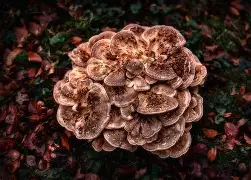
Also known as “the hen of the woods,” the Grifola frondosa mushroom is a perennial mushroom native to China, Europe, and North America. It’s a somewhat common mushroom, sprouting from the ground near the bases of trees, making its collection for study quite easy. The bioactive compounds in this mushroom induced cancer cell apoptosis in gastric cancer and hepatocarcinoma[5]. As well as reducing the speed at which cancer cells grow, or halting their progress. Like other medicinal fungi, these mushrooms contain beta-glucan, an immune-boosting compound that, according to Bishop et al., increases the activity of killer T cells while increasing the efficacy of chemotherapy [8].
Trametes versicolor
Active compounds: Krestin, PSK, PSP
Trametes versicolor is a polypropylene mushroom that grows on decaying logs and trees. It is also known as the turkey tail mushroom, due to its vibrant colors along the surface of the fungus resembling a turkey’s tail feathers. The bioactive compounds that are prevalent in this fungus are known as Krestin (also known as PSK or polysaccharide-Kureha). Even though it has only been cleared for testing and use in cancer treatment in Japan, it still shows promising qualities. Referencing Habtemariam’s table [21]. It shows results of over one hundred strains of Trametes versicolor compounds and their toxicity against cancerous cells. With multiple strains showing potential in combating cancerous cells. Such as polysaccharide-rich extracts obtained from the aforementioned mushroom strains. Showing a decrease in oncogenic potential, and reduces cell migration and invasion. While increasing cytotoxicity against malignant cells, and the expression of E-cadherin. An enzyme that acts as a binding agent between cells, providing cellular support and tumor suppression.
Lentinula edodes
Active compounds: Genistein Combined Polysaccharide (GCP)
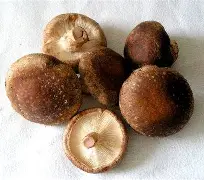
Lentinula edodes, also known as shitake mushrooms, has been used in East Asia for many centuries as both cuisine and medicine. It’s native to Asian countries such as Japan and China, but can be found in the USA and Europe as a cultivated mushroom on farms. Along with its gastronomical uses, it has also been shown through research by Nowakowski et al. that the extract of the shitake mushrooms, genistein combined polysaccharide (GCP) [2], has the potential to be useful with its antiproliferative properties. Though some research is conflicting, such as a review by Byrant Furlow that shows that while certain research did show evidence of polysaccharides and lentinans carrying large amounts of 1,3 beta-glucan, which enhanced cellular immunity, antiproliferative, and other helpful effects. Though other clinical trials challenge this idea, as it shows minimal effects of the Lentinula edodes polysaccharides, or even potential negative symptoms such as itchiness and redness of the skin [14]. So, while this mushroom has potential, it needs to be studied more in clinical trials to fully determine its usefulness in chemotherapy and cancer treatment. Though current research seems promising.
Agaricus blazei Murill
Active compounds: Agaricus polysaccharides
The Agaricus blazei murill fungus is an edible and medicinal mushroom found growing in South American countries like Brazil, and it is cultivated in places like China and Japan for its anti-tumor and immune-supporting properties [15]. Its compounds are various polysaccharides and beta-glucans. Hetland et al. found compounds that originate from this fungus, like agaritine and ergosterol, which induce apoptosis in cancerous leukemia cells and significantly reduce tumor growth by suppressing angiogenesis in the invading cells. They also contain the aforementioned glucans, specifically β-1,3-/1,6-glucans, which have an effect similar to immunomodulating medications [16]. Adding on to this, testing done with mice reiterates its effects against cancerous cells, with promising results against myeloma, lung, ovarian, and other cancers. This is backed by studies done by others, such as Jon-Magnus Tangen et al. Showing that the mushroom’s polysaccharides have a significant effect against cancerous cells. [2]
Conclusion
Mushrooms, while being a common sight for many throughout the day, still have untapped potential that is beginning to be studied and utilized by several doctors and researchers. With proper extraction using a variety of methods, such as ethanol and water extracts [5]. Cancer rates across the United States, or maybe even the globe, can drop. The aforementioned polysaccharides and vitamins in these fungi, such as those proposed by Sobota et al. Water-soluble compounds like B1, B2, B3, B12, and other phenolic compounds like carotenoids [17]. It could be used in medical settings in combination with other cancer treatments, such as chemotherapy and immunotherapy. Which is already being done in parts of the world. Fonseca et al. highlight case studies and treatment programs that utilize medicinal mushroom extracts with traditional therapies such as chemotherapy. The results were a decrease in tumor cell growth, hastened tumor cell death, and an elevated immune system response [19]. Showing much promise for the current and future use of these fungi in medical situations. Next time you’re outside, look around for fungus. What seems like an ordinary mushroom on the forest floor may one day be part of a global fight against cancer.
References:
1. Ba, D. M., Ssentongo, P., & Muscat, J. (2021, March). (PDF) higher mushroom consumption is associated with lower risk of cancer: A systematic review and meta-analysis of observational studies. Higher Mushroom Consumption Is Associated with Lower Risk of Cancer: A Systematic Review and Meta-Analysis of Observational Studies. https://www.researchgate.net/publication/350122441_Higher_Mushroom_Consumption_Is_Associated_with_Lower_Risk_of_Cancer_A_Systematic_Review_and_Meta-Analysis_of_Observational_Studies
2. Park, H.-J. (2022, September 10). Current uses of mushrooms in cancer treatment and their anticancer mechanisms. International journal of molecular sciences. https://pmc.ncbi.nlm.nih.gov/articles/PMC9504980/
3. World Health Organization. (2025, February 3). Cancer. https://www.who.int/health-topics/cancer
4. American Cancer Society medical and editorial content team. (2025, May 15). Chemotherapy side effects. American Cancer Society. https://www.cancer.org/cancer/managing-cancer/treatment-types/chemotherapy/chemotherapy-side-effects.html
5.Nowakowski, P., Markiewicz-Żukowska , R., Bielecka, J., Mielcarek, K., Socha, K., & Grabia , M. (2021, September 3). Treasures from the forest: Evaluation of mushroom extracts as anti-cancer agents. Biomedicine & Pharmacotherapy. https://www.sciencedirect.com/science/article/pii/S0753332221008908
6. Liu, Y.-W., Lu, K.-H., Ho, C.-T., & Sheen, L.-Y. (2012, October). Protective effects of Antrodia cinnamomea against Liver Injury. Journal of traditional and complementary medicine. https://pmc.ncbi.nlm.nih.gov/articles/PMC3942906/
7. Weil, Andrew. “Mushrooms against Cancer? – Ask Dr. Weil.” Mushrooms Against Cancer?, 7 Feb. 2014, www.drweil.com/health-wellness/body-mind-spirit/cancer/mushrooms-against-cancer/.
8.Bishop, Keith. “Beta-Glucans and Cancer.” Learn How to Prevail Over Cancer, 16 Mar. 2024, www.prevailovercancer.com/blog/beta-glucans-and-cancer.
9.LX, Fisher M Yang. “Anticancer Effects and Mechanisms of Polysaccharide-K (PSK): Implications of Cancer Immunotherapy.” Anticancer Research, U.S. National Library of Medicine, May 2002, pubmed.ncbi.nlm.nih.gov/12168863/.
10. Li, Li Feng, et al. “Destiny of Dendrobium Officinale Polysaccharide after Oral Administration: Indigestible and Nonabsorbing, Ends in Modulating Gut Microbiota.” Journal of Agricultural and Food Chemistry, U.S. National Library of Medicine, 29 May 2019, pubmed.ncbi.nlm.nih.gov/31037938/.
11. Guo, Rui, et al. “Polysaccharides as Potential Anti-Tumor Biomacromolecules -A Review.” Frontiers in Nutrition, U.S. National Library of Medicine, 28 Feb. 2022, pmc.ncbi.nlm.nih.gov/articles/PMC8919066/.
12. Park, Bae Keun, and Moon-Moo Kim. “Applications of Chitin and Its Derivatives in Biological Medicine.” MDPI, Molecular Diversity Preservation International, 15 Dec. 2010, www.mdpi.com/1422-0067/11/12/5152.
13. Jong, Mike de. “Finding and Identifying Wild Shiitake Mushrooms.” ToshiFarm, ToshiFarm, 11 Apr. 2024, toshifarm.com/en/blogs/blog/finding-and-identifying-wild-shiitake-mushrooms.
14. Furlow, Byrant. “Shiitake Mushroom, Lentinan, and Cancer.” Cancer Therapy Advisor, 23 May 2024, www.cancertherapyadvisor.com/factsheets/shiitake-mushroom-lentinan-and-cancer/.
15. Mier, Natasha. “A Complete Guide to the Agaricus Blazei Mushroom.” Abm, abm-tea, 17 Jan. 2022, www.abm-tea.com/blogs/blog/a-complete-guide-to-the-agaricus-blazei-mushroom.
16. Hetland, Geir, et al. “The Mushroom Agaricus Blazei Murill Elicits Medicinal Effects on Tumor, Infection, Allergy, and Inflammation through Its Modulation of Innate Immunity and Amelioration of Th1/Th2 Imbalance and Inflammation.” Advances in Pharmacological Sciences, U.S. National Library of Medicine, 2011, pmc.ncbi.nlm.nih.gov/articles/PMC3168293/.
17. Łysakowska, Paulina, et al. “Medicinal Mushrooms: Their Bioactive Components, Nutritional Value and Application in Functional Food Production-A Review.” Molecules (Basel, Switzerland), U.S. National Library of Medicine, 14 July 2023, pmc.ncbi.nlm.nih.gov/articles/PMC10384337/.
18. Guo, Y.-J., Pan, W.-W., Liu, S.-B., Shen, Z.-F., Xu, Y., & Hu, L.-L. (2020, March). Erk/MAPK signalling pathway and tumorigenesis. Experimental and therapeutic medicine. https://pmc.ncbi.nlm.nih.gov/articles/PMC7027163/
19. Fonseca, J., Vaz, J. A., & Ricardo, S. (2024, March 14). The potential of mushroom extracts to improve chemotherapy efficacy in cancer cells: A systematic review. Cells. https://pmc.ncbi.nlm.nih.gov/articles/PMC10969097/
20. Wang, X., Ha, D., Mori, H., & Chen, S. (2021, March). White Button Mushroom (agaricus bisporus) disrupts androgen receptor signaling in human prostate cancer cells and patient-derived xenograft. The Journal of nutritional biochemistry. https://pmc.ncbi.nlm.nih.gov/articles/PMC8542389/
21. Habtemariam, S. (2020, May 25). trametes versicolor (synn. coriolus versicolor) polysaccharides in cancer therapy: Targets and efficacy. Biomedicines. https://pmc.ncbi.nlm.nih.gov/articles/PMC7277906/
Media Attributions:
(1) Agaricus bisporus image is used legally from, Agaricus bisporus the commercial mushroom – Inanimate Life
(2) Antrodia Cinnamomea is used legally from, Antrodia camphorata, Taiwanofungus camphoratus, Antrodia cinnamomea, Niu-Chang-Chih | News on Taiwantrade
(3) Grifola frondosa, or hen of the woods mushroom, is used legally from, Grifola frondosa | Maitake – Eikhaas – Polypore en touffe – … | Flickr.com
(4) Trametes versicolor fungus is used legally from, Trametes versicolor (White-rot fungus) (Coriolus versicolor), uniprot.org
(5) Lentinula edodes, shitake mushroom is used legally from, Lentinula edodes — Wikipédia, fr.wikipedia.org
(6) Agaricus Blazei Murill, is used legally from,
Study on the Cultivation of Agaricus blazei (Almond Mushroom) Grown on Compost Mixed with Selected Agro-Residues